Invoices tied to services
Keep invoice items, orders, products, customers, payments, balances, and the delivered service connected for clearer operations and support.
Connect products, invoices, payments, renewals, customer records, and service automation so your billing workflow reflects what your hosting business actually delivers.
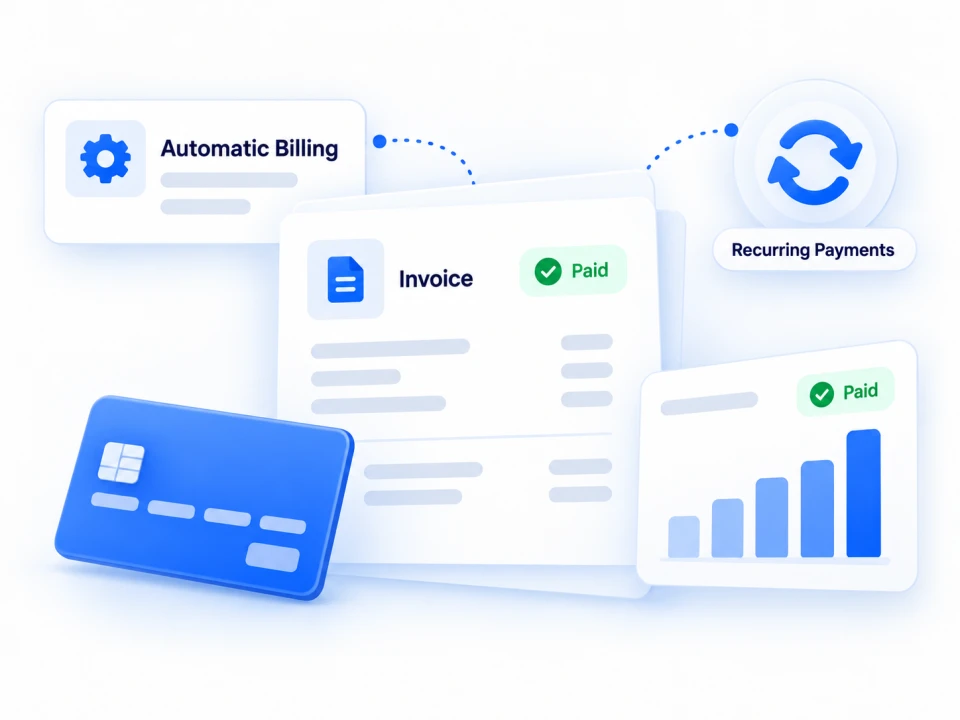
Generic invoicing tools record money. Hosting billing software must also understand products, due dates, renewals, service states, provisioning modules, domains, and the customer portal. LucidCP keeps those records connected.
Keep invoice items, orders, products, customers, payments, balances, and the delivered service connected for clearer operations and support.
Schedule renewal invoices and reminders, then let your configured rules and supported modules coordinate overdue, paid, suspended, and active service states.
Connect supported card gateways, bank-transfer review, account balance, and other payment methods without storing card details in LucidCP.
Configure currencies and tax rules, use exchange-rate integrations, and connect supported finance tools for the accounting workflow your business requires.
Customers can review orders, invoices, payments, balances, services, and support history from the same responsive account.
Send business events to your own endpoints and notification channels, or use scoped API access where the selected plan includes it.
Build the workflow from verified commercial rules and test it with a non-production product before taking live orders.
Set the price, billing period, tax treatment, configurable options, stock rules, and the provisioning module that will deliver the service.
The customer chooses a product and payment method; LucidCP keeps the commercial records and service request linked.
A supported gateway callback, account-balance payment, or authorised manual review updates the invoice through the configured payment flow.
After the required approval state, the linked module receives the product configuration and performs the actions that integration supports.
Due dates, reminders, customer communication, ticket history, and supported suspension or reactivation actions stay attached to the account.
Automation is safest when payment, tax, refund, renewal, and service-lifecycle rules are explicit and tested.
Each integration page documents its actual protocol, authentication method, payment flow, and availability. Provider fees and account eligibility are separate from LucidCP.
Hosting billing software connects the commercial record to a service, module, domain, renewal date, customer account, and support history. That connection lets payment state participate in provisioning and lifecycle workflows.
LucidCP integrates with supported payment providers; card details are processed by the chosen provider rather than stored by the LucidCP sales system. Review each gateway and your provider agreement before launch.
Check multi-language and multi-currency availability for your selected package in the current pricing matrix. Supported currencies and payment flows also depend on the exchange-rate and payment integrations you configure.
LucidCP supports service lifecycle workflows, and many server integrations include suspend and unsuspend actions. The result depends on your automation rules and the exact operations supported by the connected module. Test this with a non-production service first.
The integration directory includes finance and official-invoice connectors such as Paraşüt and other regional tools. Supported document types, currencies, tax rules, and account requirements vary by connector.
Hi! Need help with plans, installation, or licensing?
Help Center Open a Support Ticket Integrations